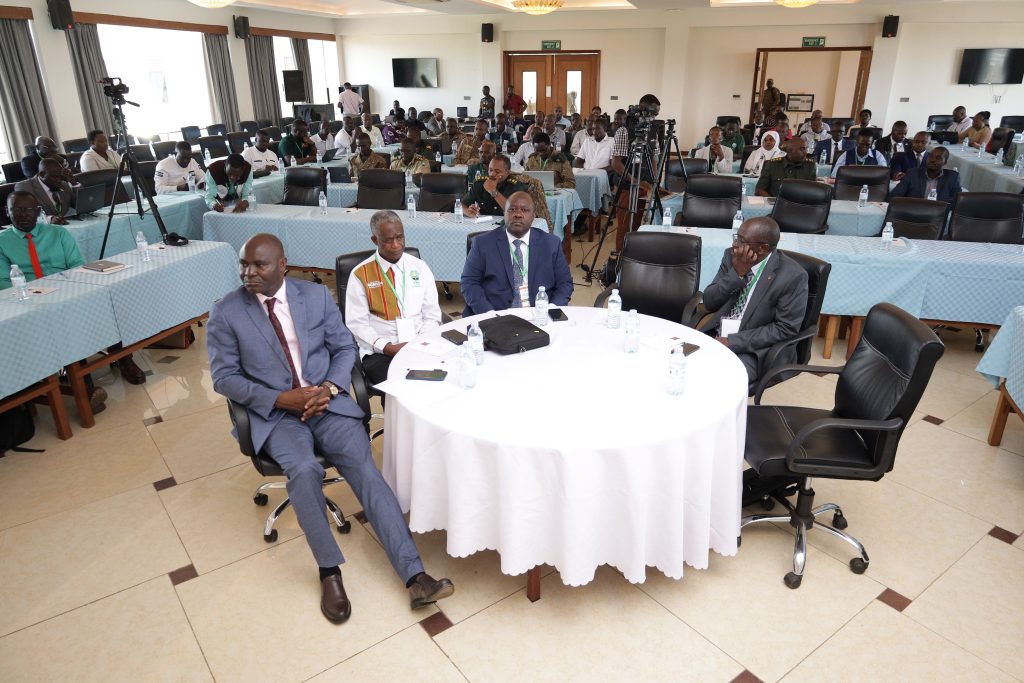
UWRTC and UWA Host Inaugural National Biodiversity and Conservation Research SymposiumThe Uganda Wildlife Research and Training College (UWRTC), in partnership with the Uganda Wildlife Authority (UWA), successfully hosted the inaugural National Biodiversity and Conservation Research Symposium from 22–24 June 2026 at Kampala Nile Resort, Namanve. The landmark event brought together researchers, conservation practitioners, policymakers, development partners, and students from across Uganda and beyond to explore how scientific research can better inform biodiversity conservation and sustainable wildlife management.
Held under the theme “Biodiversity Under Threat: Science, Innovation and Collaborative Responses,” the symposium provided a national platform for sharing research findings, promoting innovation, and strengthening collaboration among institutions committed to conserving Uganda’s rich natural heritage.
The symposium was officially opened by Dr. Bazil Ajer, Director of Tourism at the Ministry of Tourism, Wildlife and Antiquities, who underscored the importance of integrating scientific research into conservation planning and implementation. He noted that the symposium was timely as Uganda continues to face emerging conservation challenges, including habitat loss, ecosystem degradation, human-wildlife conflict, and increasing pressure on protected areas.
Dr. Ajer commended researchers and conservation scientists for generating knowledge that supports sustainable development and urged them to ensure that their work extends beyond academic publications to directly influence government policy and conservation practice.
“Evidence alone, without adaptation, leads to no change.”
He reaffirmed the Government’s commitment to supporting research, innovation, and ecosystem restoration as key pillars for safeguarding Uganda’s biodiversity.
Delivering his remarks, UWRTC Principal Mr. Robert Baluku described the symposium as a significant milestone in strengthening Uganda’s conservation research agenda.
“This symposium marks an important step towards strengthening Uganda’s conservation research framework. One of our key objectives was to bridge the gap between research institutions and field practitioners while promoting innovation that directly supports biodiversity conservation and wildlife management.”
Mr. Baluku emphasized that the College remains committed to ensuring that scientific research goes beyond academic achievement to generate practical solutions for conservation challenges.
“Research institutions have a responsibility not only to generate knowledge but also to ensure that scientific evidence reaches decision-makers and translates into practical conservation actions.”
He further noted that the symposium created a valuable opportunity for emerging scientists and university students to interact with experienced researchers, conservation managers, and policymakers. Such engagements, he said, are essential for nurturing the next generation of conservation professionals capable of developing homegrown solutions to Uganda’s increasingly complex environmental challenges.
UWA Executive Director Dr. James Musinguzi emphasized the critical role of research in addressing the growing threats to biodiversity.
“We must continue producing scientific evidence to guide conservation decisions. Biodiversity is essential for our survival and development, and conservation efforts must be driven by research and innovation.”
Dr. Musinguzi also announced UWA’s intention to establish a dedicated Wildlife Research Journal that will provide researchers with a credible platform to publish scientific findings and promote evidence-based wildlife management across Uganda. He called upon government, development partners, and conservation organizations to increase investment in research, emphasizing that effective conservation depends on reliable scientific data.
He expressed optimism that the National Biodiversity and Conservation Research Symposium would become an annual event bringing together scientists, policymakers, and conservation managers to exchange knowledge, innovations, and best practices.
The symposium also featured remarks from UWA Board Chairperson Dr. James Kalema, who encouraged conservation stakeholders to embrace scientific innovation and international collaboration in responding to biodiversity loss.
“We cannot protect what we do not understand. Advancing genetic research, scientific innovation, and global collaboration is essential for halting biodiversity loss, restoring degraded ecosystems, and securing a sustainable future.”
During the symposium, Mr. John Makombo, UWA Commissioner for Biodiversity Conservation, highlighted UWA’s continued collaboration with universities, research institutions, and conservation organizations to improve understanding of wildlife populations, ecosystem health, and emerging environmental threats. He noted that partnerships between researchers and conservation practitioners are essential for developing practical responses to challenges such as climate change, habitat degradation, and human-wildlife conflict.
The symposium showcased several innovative conservation tools, including the EarthRanger application, which supports real-time wildlife monitoring and has significantly enhanced ranger operations and responses to human-wildlife conflict across conservation areas.
Throughout the three-day event, participants presented research on wildlife ecology, biodiversity monitoring, ecosystem restoration, climate resilience, invasive species management, community conservation, protected area management, and emerging technologies supporting conservation. The discussions reflected Uganda’s growing scientific capacity and reinforced the importance of collaborative research in addressing national conservation priorities.
As one of Africa’s most biologically diverse countries, Uganda is home to approximately half of the world’s remaining mountain gorillas, more than 1,000 bird species, hundreds of mammal species, and thousands of plant species distributed across forests, wetlands, savannas, and freshwater ecosystems. However, these natural resources continue to face increasing threats from habitat destruction, illegal wildlife trade, climate change, invasive species, and growing competition for land and natural resources.
The successful hosting of the inaugural National Biodiversity and Conservation Research Symposium demonstrates UWRTC’s growing leadership in conservation research, capacity building, and knowledge exchange. By convening researchers, practitioners, students, and policymakers on a common platform, the College reaffirmed its commitment to advancing science-driven conservation and supporting evidence-based decision-making for the sustainable management of Uganda’s biodiversity.